About Lightstreams
Tuesday 3rd November 2026
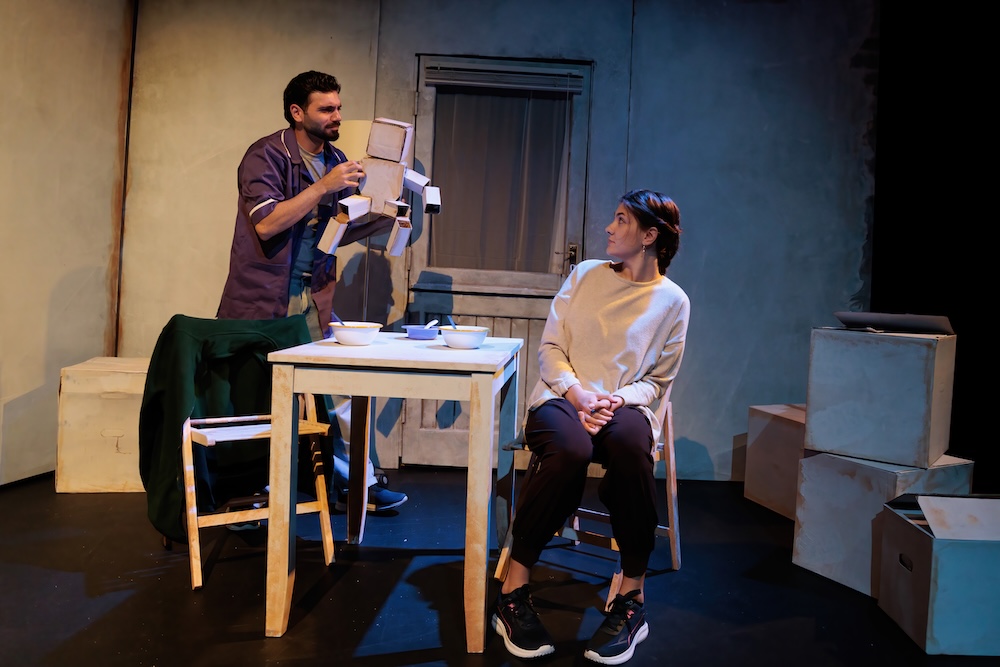
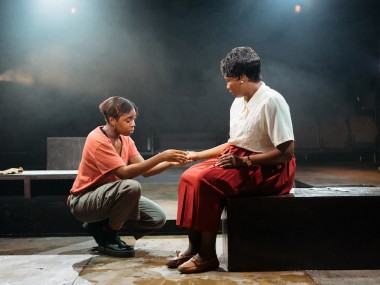
Yesterday, I watched one of the final performances of Mary Mazzilli’s Lightstreams at Theatre 503, as the show — produced by Lumenis Theatre — completed its national tour, which began in early October. This is also the day that Home Secretary Shabana Mahmood announced changes to the immigration system which make it more difficult for some migrant workers to get Indefinite Leave to Remain in this country. A grim irony because the play is about a migrant couple who have made their home here: Maurice and Hermia. While Maurice is proud of his work as a care worker, Hermia struggles with motherhood and caring for their baby. Then the pandemic forces Maurice to live in the care home which is his place of work, where residents include 70-something Darya, whose migrant background reminds Maurice of his own family. The resulting ethical choices are strongly emotional and contemporary, and the play is based on interviews with migrant health and social care workers across London and the South East. Mazzilli uses this material not in a journalistic way, or for a bland docudrama, but much more imaginatively. Her text mixes naturalistic and instantly recognisable marital dialogues with more incantatory passages, with repetitions and overlaps, with metaphor and indirect allusions. Directed by Richard Bland, and with excellent performances from Zakaria Meknas (Maurice), Gabriela Chanova (Hermia) and Eugenia Caruso (Darya), the play has a rare intensity and obvious relevance. Designer Joy Chen’s claustrophobic set adds to the effect, and includes a prop baby made from small cardboard cubes, while removal boxes symbolise the transience of their lives. The play also looks at the experience of care home residents, and how many felt abandoned during the Covid lockdowns. As Darya makes desperate, partly humorous, phone calls, her loneliness is expressed metaphorically through the sensory language of smell, the odours of death. This experience, along with Maurice and Hermia’s work and domestic struggles, highlight the human stories which contest anti-migrant ideologies, and show clearly the link between migrants and care workers in a profoundly convincing way. After the show, I was on a panel with Mazzilli and Olivia Firth from the Care Workers Charity, discussing both the play and the situation of migrant care workers today. The playwright outlined her working process, the collecting of material from stressed interviewees (who often had barely enough time during their shifts to talk), and the origins of the play in the Covid emergency, while Firth succinctly explained some of the challenging “small print” of Mahmood’s changes. The audience participated in the discussion, a reminder that some of the most important political interventions take place on the fringe rather than the mainstream. Definitely a momentary sparkle of light in our darkness.
© Aleks Sierz