About The Estate
Monday 16th November 2026
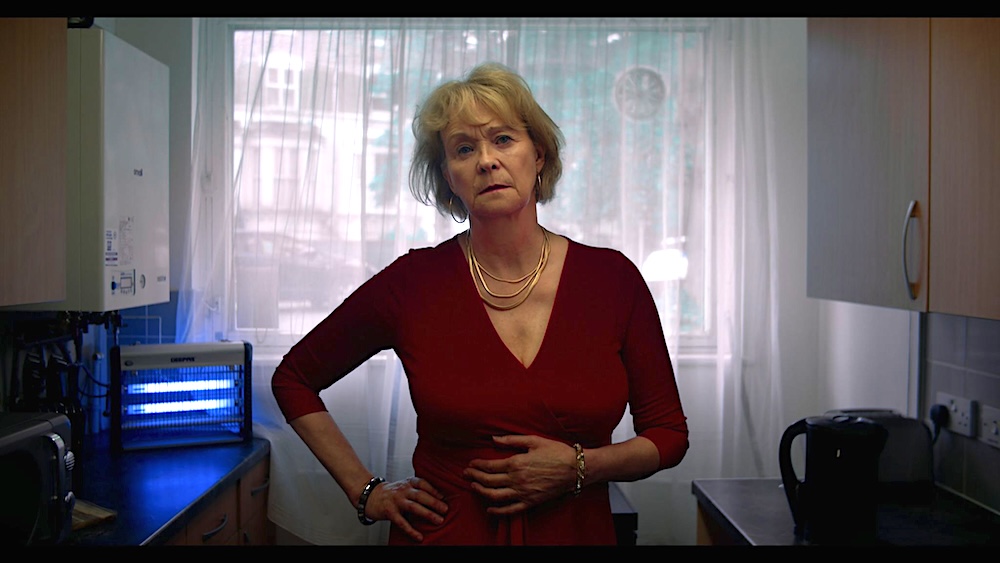
Passion is the engine of creativity. And Dan Horrigan, a film- and theatre-maker, as well as an educator, has a long-standing passion for Georg Büchner’s Woyzeck. His most recent engagement with this classic of European theatre, written in 1836 and unfinished at the time of the German playwright’s death, is The Estate, a series of short films whose text he’s adapted from the original and whose filming he has directed along with his cinematographer, Fraser Watson, and an excellent cast. It’s an example of his engagement with adaptation: “I am particularly interested in adaptation as praxis and the reinterpretation, re-contextualisation and repurposing of cultural materials across different mediums, forms and performance practices. I am especially interested in how this process resists recuperation and keeps radical writing and its ideas circulating in contemporary society and discourse.” He is passionate about Woyzeck “because the problems of poverty, inequality and exploitation it surveys are still pressing. The play shows what can happen when you exploit the poor and their labour, and how that can lead to dehumanising outcomes.” Horrigan’s adaptation is powered by his perception that “the play can be taken as a microcosm of many iniquities we must ameliorate today. If you can’t be a good little worker, you can’t get any help from the system.” Adapting a work is intensely personal: Woyzeck, for Horrigan, “is a radical play that argues for rights that didn’t exist when it was written. The eponymous character is illiterate but bound by contracts he lacks the wherewithal to comprehend (he’s a psychiatric case study). In other areas, poverty locks him out of contracts that could improve his standing (like marriage). Unable to subsist safely and with no provision, the characters are trapped.” These characters in The Estate speak and sing in verse which starkly differs from Büchner’s realism. He points out that Buchner’s script of Woyzeck, with its short scenes, is closer to a film script than his own adaptation, which is pleasurably ornate in its poetry and intensity. “Shooting on the Blake Court estate in Kilburn, London — a housing complex scheduled for demolition — informs the frangibility of the mind, the body and the memory of the character. Walking the shots for the film was a lesson in psychogeography — the ambience was palpable — and the estate’s failure to suitably accommodate people added a danger that the actors could use. The buildings we used are named after exemplary writers: Dickens and Austen, as well as Blake. And much of my writing was lifted from actual snatches of dialogue I collected on my derives around the estate. I like this because Woyzeck is a proto verbatim play.” Horrigan allowed himself to be guided by these voices — wherever they led. The work of the production team provides a visual and sonic aura that holds it all together. “There’s beauty to it, yet it’s also a nasty, short and brutish film about people who never got a chance at anything else.” Just as in the original play.
• Extract: Grandma by Dan Horrigan, acted by Gillian Broderick (produced by Covert Firmament). “Gill’s work in the film is startling — by turns diffuse then piercing — she experiences with both fierceness and subtlety the cost of a life never fully lived. The dreamlike swarms of intensity she conveys contrast with the realist setting to provoke both pity and profound despair. This short piece provokes intensities of feeling and moves unexpectedly through years of anger, grief and fractured recollection.”
© Aleks Sierz